What we’re watching: Where and how the Army strikes a balance between tradition, like a multimillion-dollar assault breacher vehicle, and novelty, like an armed, self-navigating pickup truck.
Axios Future of Defense Read More »
What we’re watching: Where and how the Army strikes a balance between tradition, like a multimillion-dollar assault breacher vehicle, and novelty, like an armed, self-navigating pickup truck.
Axios Future of Defense Read More »
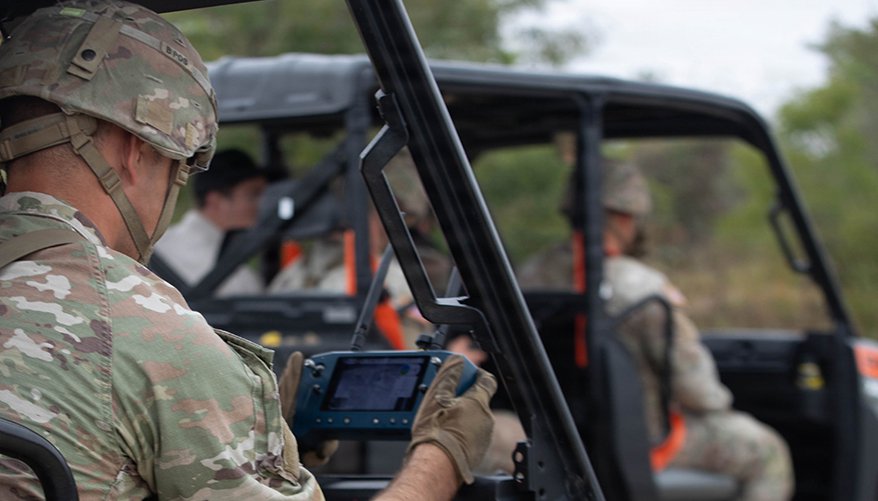
The U.S. Army has established a new standard in robotic combat, with soldiers now proficiently controlling up to 21 small drones and four large autonomous vehicles simultaneously. Recent exercises at Fort Bragg’s Sandhills Project demonstrated this “swarm warfare” capability, designed to overwhelm enemies and shift engagements towards robot-on-robot combat. Troops utilized Bumblebee V2 drones and a semi-autonomous Ford F-250 equipped with a 12-gauge shotgun turret for safe anti-drone defense. This force multiplication strategy, accelerated by direct soldier-industry collaboration, enables smaller units to achieve greater impact, conduct elaborate deception operations, and significantly reduce human risk. The Army confirms swarm tactics are no longer future concepts but the present reality, ushering in an era of machine-centric battles.
How Drone Swarm Tactics Are Becoming The New Norm For U.S. Soldiers Read More »
The U.S. Army’s LTG James M. Gavin Joint Innovation Outpost, or JIOP, is compressing the timeline between a soldier’s idea and a fielded capability, delivering several equipment capabilities to the XVIII Airborne Corps through a partnership with the Combat Capabilities Development Command’s Army Research Laboratory Catalyst Pathfinder program, according to the U.S. Army DEVCOM Army Research Laboratory Public Affairs Office.

When an Army commander needs a warfighting capability, he or she now has a place to go to get it fast.
They just have to ask the Global Tactical Edge Acquisition Directorate (G-TEAD). Launched officially in November, G-TEAD’s mission is to fill technology gaps based on soldiers’ needs and therefore relieving commanders of the challenges of the acquisition and funding processes.
Army G-TEAD filling technology gaps at the edge Read More »
As the Army accelerates its acquisition reform processes and structures, the Pathway for Innovation and Technology, is designed to rapidly field and scale technology by bridging the so-called “valley of death”- the gap between technology development and deployment.
Army ‘Pathway for Innovation’ fast-tracks testing and scaling of new capabilities Read More »
The U.S. Army is streamlining the acquisition of cutting-edge technologies, making it easier to deliver innovative solutions directly to soldiers through its Pathway for Innovation and Technology (PIT)
Army’s PIT Program Accelerating Technology Innovation Read More »
Pathway for Innovation and Technology will connect rapid-acquisition hubs to program chiefs.
New Army office aims to quickly develop and scale soldier ideas Read More »
A new Army office, The Pathway for Innovation and Technology, is working to forge a more accessible pathway for companies to get innovative technology into the hands of Soldiers.
New Army Office Aimed at Forging Pathway to Rapid Fielding Read More »
The U.S. Army is undertaking a sweeping transformation of its acquisition process, designed to dramatically accelerate the delivery of critical warfighting capabilities to Soldiers.
Army revolutionizes acquisition process to deliver warfighting capabilities faster Read More »
The following memorandums were referenced by Secretary of War Pete Hegseth during his remarks at the National War College on Fort McNair, Washington, D.C., on Friday, November 7. These directives outline the Department’s next phase of acquisition.
Secretary of War Announces Acquisition Reform Read More »