
As unmanned aerial threats intensify across Europe, the Army Pathway for Innovation and Technology’s (PIT) Global Tactical Edge Acquisition Directorate (G‑TEAD) has emerged as a decisive force in delivering combat‑credible capabilities at the speed of war.
04/07/2026
Streamlined Acquisition G-TEAD
By Sarah Hepburn, Office of Army Pathway for Innovation and Technology (PIT)
As unmanned aerial threats intensify across Europe, the Army Pathway for Innovation and Technology’s (PIT) Global Tactical Edge Acquisition Directorate (G‑TEAD) has emerged as a decisive force in delivering combat‑credible capabilities at the speed of war. The recent deployment of the Merops counter‑drone system to Poland and Romania, now actively fielded and trained on by U.S., Polish, and Romanian forces, its rapid expansion to the Middle East as conflict with Iran escalates, and its identification as a transition candidate for a Program of Record all underscore the system’s growing impact. Together, these developments stand as one of the clearest demonstrations of G‑TEAD’s ability to rapidly identify, acquire, and integrate mission‑critical technology in response to real‑world operational demands.
Responding to Urgent Need Along NATO’s Eastern Flank
In late 2025, a series of unmanned aerial incursions into Polish and Romanian airspace underscored a growing capability need along the North Atlantic Treaty Organization (NATO)’s Eastern Flank. Traditional air‑defense responses were too costly and slow to counter the volume and pace of modern drone activity. As a result, U.S. Army Europe and Africa Command (USAREUR‑AF) issued an urgent request for a low‑cost, highly mobile counter‑unmanned aerial systems (c-UAS) solution capable of addressing this emerging threat.
Within days of the initial hostile act along the Eastern Flank Deterrence Line, G‑TEAD deployed a team in-country to identify, validate, and onboard a combat‑proven c‑UAS system for immediate experimentation and iteration. Working alongside USAREUR‑AF, the team witnessed live demonstrations of the Merops system and confirmed its suitability for rapid fielding.
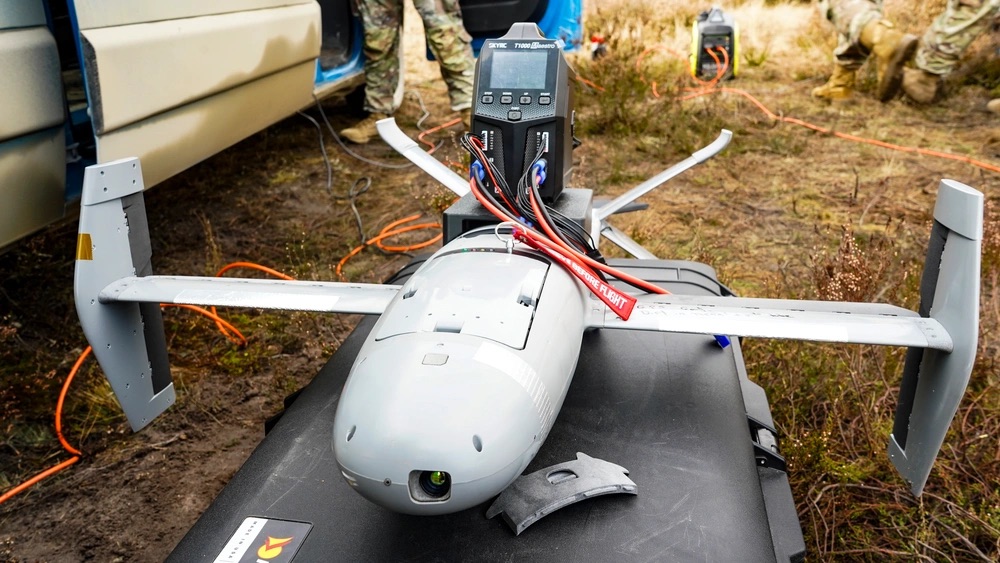
Merops, developed by U.S. defense firm Perennial Autonomy (formerly Project Eagle), is a mobile counter‑drone platform that launches small interceptor drones from a truck‑mounted system to disable incoming threats. The system had already demonstrated its effectiveness in Ukraine and was also in use among NATO partners, providing a proven foundation for accelerated deployment.
Leveraging an existing contract vehicle through the 409th Contracting Support Brigade, G‑TEAD immediately procured 50 systems for experimentation and operational use during a joint exercise between Poland and Romania. In parallel, G‑TEAD synchronized efforts across Task Force UxS (U.S. Special Operations Command) and Joint Interagency Task Force 401 (JIATF-401) to eliminate duplicative innovation work and ensure enterprise alignment. This rapid, coordinated action closed a critical capability gap and demonstrated the agility, integration, and operational focus that defines G‑TEAD’s mission.
Accelerated Acquisition at Scale
Following the initial procurement of 50 Merops systems, G‑TEAD secured a major bailment agreement with Perennial Autonomy within 48 hours of the demonstration, obtaining roughly $6 million in equipment across three complementary capabilities: Merops, Hornet, and Bumblebee. While Merops, Hornet, and Bumblebee each bring distinct operational strengths, collectively they provide scalable effects and multi-purpose mission capability, enabling commanders to generate attritable mass across the battlefield. The remaining bailment was delivered over a 90‑day period and completed in February, with systems now being fielded and trained across Europe to enhance the Army’s capacity to counter unmanned threats in contested environments.
Additionally, JIATF‑401 quickly issued a prototype other transaction agreement (OTA) in the amount of $5.2 million to quickly procure additional Bumblebee systems in support of the southern border mission. This allowed for accelerated delivery and demonstrated how the team was able to identify and field a solution adaptable across multiple operational environments and emerging conflicts.
One of the most significant outcomes is that Merops has now been identified as a transition candidate for Project Manager Close Combat Systems, Joint Capability Program Executive Ammunition & Energetics, a major step that positions the capability to become a Program of Record. This milestone represents more than a programmatic win; It validates G‑TEAD’s model of rapid acquisition, operational experimentation, and enterprise synchronization to accelerate the delivery of relevant capabilities to Soldiers and allies.
The impact is now extending beyond Europe. As conflict with Iran intensifies, the U.S. rapidly deployed thousands of Merops interceptors to the Middle East to counter sustained aerial attacks. The same low-cost, rapidly fielded capabilities G-TEAD accelerated for NATO’s Eastern Flank are now defending U.S. forces and regional partners against Iranian drones, demonstrating Merops’ scalability and its ability to meet the needs of Soldiers, today.
G‑TEAD’s work on Merops is more than a single success story. It demonstrates what becomes possible when acquisition is aligned to operational urgency, empowered by flexible authorities, conducted in partnership with entities such as SOCOM and JIATF-401, and driven by a relentless focus on delivering outcomes that matter. This effort reflects a broader shift toward a faster, more integrated modernization enterprise—one reinforced by the innovation programs synchronized across the Army PIT enterprise.
About G-TEAD
The Army Pathway for Innovation and Technology (PIT)’s Global Tactical Edge Acquisition Directorate (G-TEAD) is the force’s premier acquisition hub, designed to close the gap between evolving threats and the speed of delivering critical solutions. G-TEAD’s mission is to rapidly transform urgent commanders’ needs into combat-ready, interoperable systems, ensuring Soldiers sustain battlefield dominance in any environment.
Through synchronized efforts across the acquisition enterprise and close collaboration with allied partners, G-TEAD accelerates the delivery of minimum viable products (MVPs) to theater, bridging innovation with mission success. As the Army’s central hub for agile capability deployment, G-TEAD ensures Soldiers are equipped with the tools they need to win—wherever and whenever the fight arises.
About The Army Pathway for Innovation and Technology (PIT)
The Army Pathway for Innovation and Technology accelerates Army modernization through dual-use innovation, strategic partnerships, and mission-driven outcomes. As a critical enabler of Army acquisition reform, PIT injects capability faster by getting in the dirt with the Soldier, performing prototyping at the edge and delivering operational impact at the speed of relevance.
The PIT serves as a critical hub that integrates the efforts of three essential organizations within the Army innovation enterprise. Army FUZE, the Joint Innovation Outpost (JIOP), and the Global Tactical Edge Acquisition Directorate (G-TEAD) serve as the operational backbone of the PIT, underpinned by a unified vision to see, share, synchronize, and scale.
Stay Updated
Stay connected with Army PIT on LinkedIn, X (formerly Twitter), and YouTube for the latest updates and insights. Have questions? Reach out to us here.